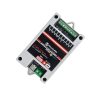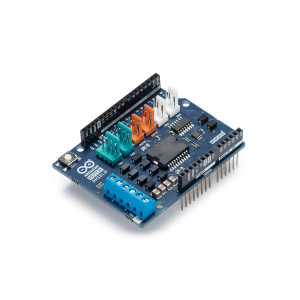


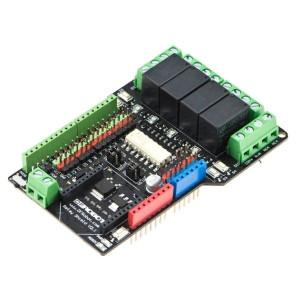
IntroductionThis is a 4-channel optpcoupler-isolated relay Arduino UNO Shield, capable of controlling high-power devices operating at AC 240V 5A or DC 24V 5A for each channel.In a home automation project, relay modules play a crucial role in managing devices such as lights, pumps, garage doors, speakers, power outlets, and fans. However, traditional relay modules are burdened by space requirements, intricate wiring, and a potential for unreliable operation. Moreover, low-quality relay modules lacking optocoupler isolation compromise the safety of the entire project.By adopting the Arduino Shield approach, this product not only eliminates the need for complex wiring but also provides a substantial boost to project reliability. Through the integration of a 4-channel relay, it enables an Arduino UNO mainboard to exercise comprehensive control over a diverse range of devices.4 Channel Relay Shield for ArduinoFurthermore, this expansion board boasts an XBee interface in addition to 14 3-pin digital ports and 6 3-pin analog ports. With the inclusion of the XBee interface, users have the freedom to integrate wireless modules like Bluetooth, WiFi, or Zigbee, unlocking a realm of advanced capabilities such as IoT integration, seamless smart home integration, convenient mobile control, and efficient coordination among multiple devices.Arduino Uno Relay Shield Boasts an XBee InterfaceWith its 4-channel optocoupler isolation and independent power supply features, this relay expansion board effectively isolates the electrical connection between AC and DC, guaranteeing the utmost electrical safety. This meticulous design effectively eliminates any potential electromagnetic interference, thereby safeguarding the Arduino mainboard from the perils of high-voltage electrical signals and mitigating the risk of damage.FeaturesCompatible with Arduino UNO Rev3Each Relay has its own test button to test the connectionStandard DFRobot 3 Pin outXBee I/O direct controlSpecificationCompatible with Arduino UNO Rev34 buttons to test moduleLED status indicator of relaySupport Xbee IO directly controlXbee socket for wireless communicationSelectable digital IO pin for control (Default digital 2,7,8,10) 6 channels Analog IO & 13 channels Digital IO Up to 4 Relay with photo-coupled circuitContact Rating 3A AC 120V / DC 24VMax Switching Voltage AC 240V / DC 60V (Less than 38V is recommended)Max Switching Current 5AMax Switching Power AC 360VA / DC 90WElectrical Life (Min) 100,000 OperationsMechanical Life (Min) 10,000,000 OperationsSafety Standard(relay) UL cUL TUV CQCCoil Working Voltage 9VDCWorking temperature -30℃ to +85℃Working Humidity 40% - 85%Size: 95x65mmDocumentsWiki (Relay Shield for Arduino V2.1)SchematicsBoard LayoutSample codeHJR4102 datasheetShipping ListRelay Shield for Arduino V2.1 x1Nylon stand-off with screw x2
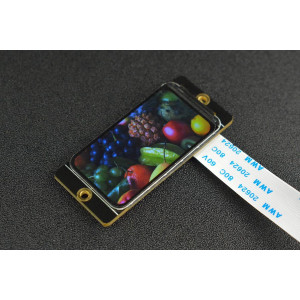
IntroductionThis exquisite little display is a good choice for projects requiring colorful and clear displaying effects!Based on the ST7789V3 driver chip, this 1.47" display has 172×320 pixels with IPS any-angle viewing and SPI interface for communication. It comes with a 1mm narrow frame and rounded corners. The display can be used to display text messages, images, animations or videos. Also, with the supported Arduino GLD and LVGL libraries, more amazing dynamic effects can be achieved.It is widely suitable for DIY projects like mini game consoles, weather stations, pendants, clocks, video players, meters, etc.FeaturesCurved edges172×320 pixelsNarrow frame with a width of 1mmHD IPS, adjustable viewing directionApplicationsMini weather stationPendantsMiniature metersVideo playersDIY giftsMini game consolesMini clocksMini humidity temperature metersSpecificationDisplay Dimension: 1.47"Pixels: 172×320Interface: SPIBrightness: 600(TYP)Cd/m2Viewing Direction: full angleOperating Temperature: -20℃ to +70℃Operating Voltage: 3.3VBacklit: 3 White LED ParallelDisplay Area: 19.1mm×33.8mm/0.75×1.33"Module Dimension: 19.5mm×44.5mm/0.77×1.75"DocumentsProduct wikiSTP 3D file2D CADSchematicsShipping List1.47" 172×320 IPS LCD Display Module ×1Black Single-row Pin Header-8PIN ×1FPC Cable ×1
IntroductionThis is a 4-channel optpcoupler-isolated relay Arduino UNO Shield, capable of controlling high-power devices operating at AC 240V 5A or DC 24V 5A for each channel.In a home automation project, relay modules play a crucial role in managing devices such as lights, pumps, garage doors, speakers, power outlets, and fans. However, traditional relay modules are burdened by space requirements, intricate wiring, and a potential for unreliable operation. Moreover, low-quality relay modules lacking optocoupler isolation compromise the safety of the entire project.By adopting the Arduino Shield approach, this product not only eliminates the need for complex wiring but also provides a substantial boost to project reliability. Through the integration of a 4-channel relay, it enables an Arduino UNO mainboard to exercise comprehensive control over a diverse range of devices.4 Channel Relay Shield for ArduinoFurthermore, this expansion board boasts an XBee interface in addition to 14 3-pin digital ports and 6 3-pin analog ports. With the inclusion of the XBee interface, users have the freedom to integrate wireless modules like Bluetooth, WiFi, or Zigbee, unlocking a realm of advanced capabilities such as IoT integration, seamless smart home integration, convenient mobile control, and efficient coordination among multiple devices.Arduino Uno Relay Shield Boasts an XBee InterfaceWith its 4-channel optocoupler isolation and independent power supply features, this relay expansion board effectively isolates the electrical connection between AC and DC, guaranteeing the utmost electrical safety. This meticulous design effectively eliminates any potential electromagnetic interference, thereby safeguarding the Arduino mainboard from the perils of high-voltage electrical signals and mitigating the risk of damage.FeaturesCompatible with Arduino UNO Rev3Each Relay has its own test button to test the connectionStandard DFRobot 3 Pin outXBee I/O direct controlSpecificationCompatible with Arduino UNO Rev34 buttons to test moduleLED status indicator of relaySupport Xbee IO directly controlXbee socket for wireless communicationSelectable digital IO pin for control (Default digital 2,7,8,10) 6 channels Analog IO & 13 channels Digital IO Up to 4 Relay with photo-coupled circuitContact Rating 3A AC 120V / DC 24VMax Switching Voltage AC 240V / DC 60V (Less than 38V is recommended)Max Switching Current 5AMax Switching Power AC 360VA / DC 90WElectrical Life (Min) 100,000 OperationsMechanical Life (Min) 10,000,000 OperationsSafety Standard(relay) UL cUL TUV CQCCoil Working Voltage 9VDCWorking temperature -30℃ to +85℃Working Humidity 40% - 85%Size: 95x65mmDocumentsWiki (Relay Shield for Arduino V2.1)SchematicsBoard LayoutSample codeHJR4102 datasheetShipping ListRelay Shield for Arduino V2.1 x1Nylon stand-off with screw x2
IntroductionThis exquisite little display is a good choice for projects requiring colorful and clear displaying effects!Based on the ST7789V3 driver chip, this 1.47" display has 172×320 pixels with IPS any-angle viewing and SPI interface for communication. It comes with a 1mm narrow frame and rounded corners. The display can be used to display text messages, images, animations or videos. Also, with the supported Arduino GLD and LVGL libraries, more amazing dynamic effects can be achieved.It is widely suitable for DIY projects like mini game consoles, weather stations, pendants, clocks, video players, meters, etc.FeaturesCurved edges172×320 pixelsNarrow frame with a width of 1mmHD IPS, adjustable viewing directionApplicationsMini weather stationPendantsMiniature metersVideo playersDIY giftsMini game consolesMini clocksMini humidity temperature metersSpecificationDisplay Dimension: 1.47"Pixels: 172×320Interface: SPIBrightness: 600(TYP)Cd/m2Viewing Direction: full angleOperating Temperature: -20℃ to +70℃Operating Voltage: 3.3VBacklit: 3 White LED ParallelDisplay Area: 19.1mm×33.8mm/0.75×1.33"Module Dimension: 19.5mm×44.5mm/0.77×1.75"DocumentsProduct wikiSTP 3D file2D CADSchematicsShipping List1.47" 172×320 IPS LCD Display Module ×1Black Single-row Pin Header-8PIN ×1FPC Cable ×1